

AI at workplace is becoming increasingly common. From chatbots handling customer service to algorithms optimizing supply chains, artificial intelligence is transforming how we work. Now, a new question arises: Could AI in management be the next big step? Let’s explore whether having an AI boss might be better than your current human one.
Pros of AI bosses
AI leadership could offer several advantages:
1. Reduced bias and favoritism
Human managers often have unconscious biases that affect their decisions. An AI supervisor might avoid these pitfalls. According to a survey reported by Tech.co, 28.2% of US workers believe a robot boss would make less biased decisions than humans. Furthermore, 28.8% think AI would lead to lower levels of discrimination in the workplace.
2. Efficient task management and planning
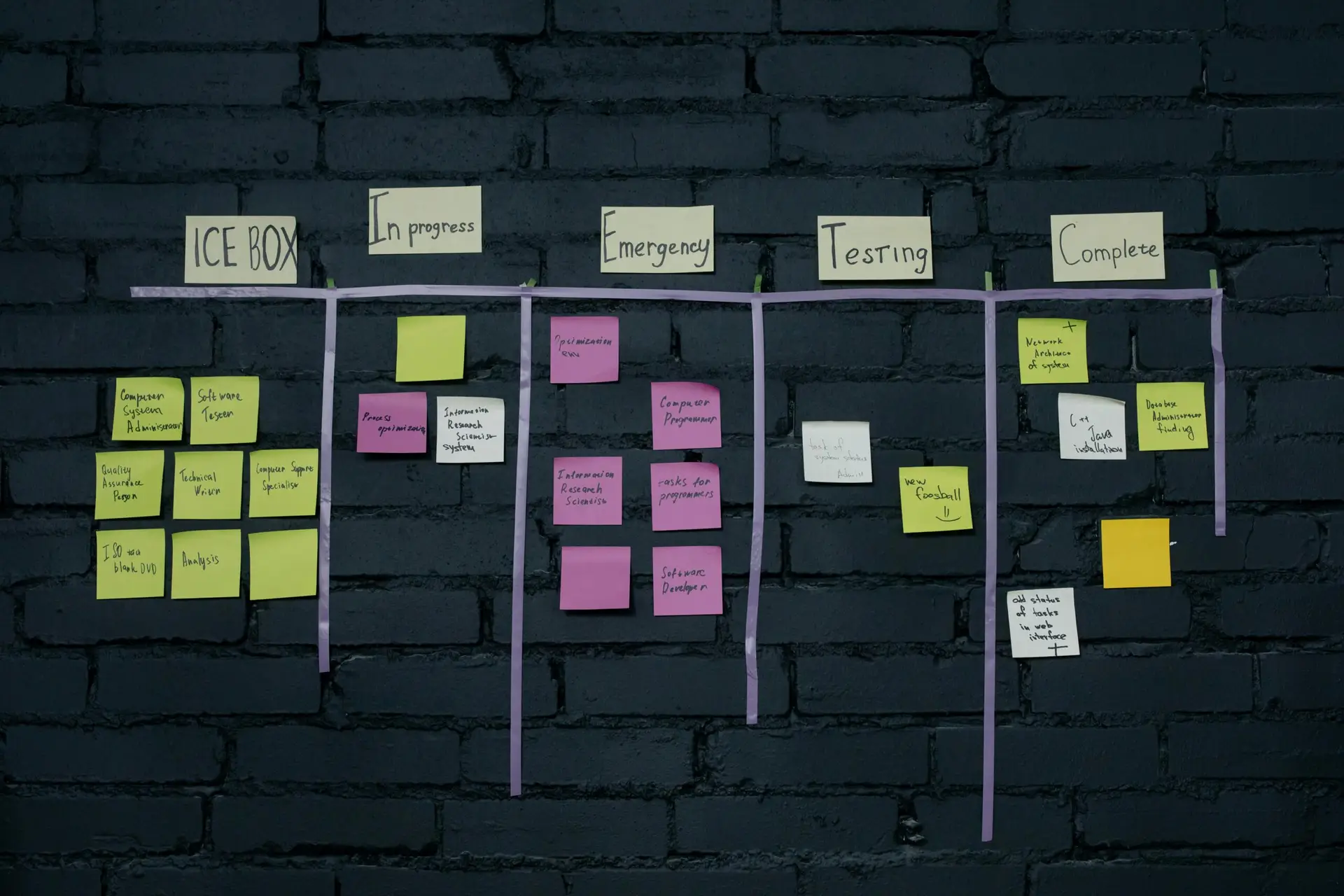
AI at workplace excels at organizing and optimizing tasks. A study at Student Marketing Agency, reported by BBC News, demonstrated this capability. An AI manager achieved a 44% success rate in getting employees to pre-plan their workdays. It also motivated employees to log in on time 42% of the time. These figures were comparable to human managers’ performance.
3. Data-driven decision making

AI in management can process vast amounts of data to make informed decisions. This ability could lead to more objective and efficient project management. AI could analyze performance metrics, market trends, and resource allocation to optimize business strategies.
4. Consistent performance
Unlike human bosses, AI doesn’t get tired, emotional, or distracted. A robot boss could provide consistent management 24/7, potentially leading to improved productivity and employee satisfaction.
Let’s explore how AI might excel at certain leadership skills:
Setting clear objectives:
AI could use data analytics to create precise, measurable goals for each team member. It could track progress in real-time and adjust objectives as needed, ensuring that everyone always knows what they’re working towards.
Rewarding good initiatives:

An AI boss could consistently recognize and reward good work. It could use predefined criteria to identify outstanding performance and provide immediate positive feedback. This consistent recognition could boost employee morale and motivation.
Decision-making skills:
AI can process and analyze vast amounts of data to make informed decisions. It could consider multiple factors simultaneously, weigh pros and cons objectively, and make choices based on logical reasoning rather than emotion or gut feeling.
Cons of AI bosses
Despite these potential benefits, AI leadership has significant drawbacks:
Lack of emotional intelligence
AI struggles with understanding and managing emotions, a crucial aspect of leadership. Human bosses excel at:
Building trust:

Human leaders create a safe, supportive environment by showing empathy, being vulnerable, and consistently following through on commitments. They understand the nuances of human interaction and can adapt their communication style to each team member’s needs.
Enabling knowledge exchange:

Effective leaders foster open communication by creating an environment where people feel comfortable sharing ideas. They facilitate brainstorming sessions, encourage diverse perspectives, and know how to navigate complex interpersonal dynamics to ensure everyone’s voice is heard.
Personifying company values:
Human bosses embody the organization’s principles through their actions and decisions. They can explain the reasoning behind company values, demonstrate them in challenging situations, and inspire others to align with these principles.
Caring for others:

Genuine concern for team members’ well-being is a uniquely human trait. Good leaders check in on their team’s mental health, offer support during personal challenges, and create a work environment that prioritizes work-life balance.
Limited creativity and innovation
AI might struggle with creative thinking, which is crucial for innovation and problem-solving. Justin Berg’s research, as reported by Sushantvohra on Medium, shows that managers aren’t always best at spotting good ideas. Human bosses can engage in both divergent thinking (generating creative ideas) and convergent thinking (evaluating those ideas). AI, primarily relying on existing data and patterns, might struggle with truly innovative thinking.
Difficulty in handling complex, nuanced situations
Many workplace scenarios require understanding context, reading between the lines, and making judgment calls based on subtle cues. An AI supervisor might struggle with these nuanced situations, potentially leading to misunderstandings or inappropriate responses.
What people think about AI bosses
Public opinion on AI in corporate management is mixed. A survey by Business Name Generator, reported by Tech.co, revealed interesting insights:
- One in five workers would prefer an AI boss, believing it would do a better job than their current human manager.
- However, 80% of employees aren’t ready for AI managers.
- 40% would be scared if AI replaced their boss.
Age significantly affects these opinions:
- About two-thirds of 18-24 year-olds are open to AI bosses.
- Only 12% of people over 55 like the idea.
Different industries also have varying views on AI in business management:
- 30% of UK workers in Arts and Culture welcome AI bosses
- 23% in HR are open to the idea
- 19% in Manufacturing and Utility, and Finance agree
- 17% in Healthcare would accept an AI boss
These statistics, reported by Techradar, show that acceptance of AI in HR management varies significantly across demographics and industries.
Human leaders still possess crucial skills that many believe AI can’t replicate:
Active listening:
Effective leaders fully focus on understanding others. They pay attention not just to words, but also to tone, body language, and what’s left unsaid. This skill helps them grasp the full message being communicated and respond appropriately.
Visionary thinking:
Human bosses can imagine and plan for the future in ways that go beyond data and trends. They can envision potential challenges and opportunities, inspire others with their vision, and guide their team towards long-term goals. Do you think an artificial intelligence can compete with elon Musk and his vision of colonizing mars?
Honesty and integrity:
Trustworthy leaders consistently tell the truth and do what’s right, even when it’s difficult. They admit mistakes, take responsibility for their actions, and make ethical decisions that align with their values and the company’s principles.
Self-motivation:
Good leaders can drive themselves to achieve goals without external pressure. They have intrinsic motivation, set high standards for themselves, and continually seek ways to improve and grow.
Real examples of AI in management
Some companies are already experimenting with AI in management. The Student Marketing Agency conducted a study, reported by BBC News, comparing AI and human managers:
- One group was managed by humans
- Another by AI
- A third by both AI and human managers
The results were revealing:
- The AI-only and human-only groups achieved about 45% success in getting employees to plan their day and log in on time.
- The group with both AI and human managers performed significantly better, with 72% of workers planning their day in advance.
This experiment suggests that a combination of AI and human management might be most effective. In this scenario, AI could handle tasks like:
- Project management AI: Scheduling, resource allocation, and progress tracking
- AI inventory management: Optimizing stock levels and supply chain logistics
- Data analysis: Processing large amounts of data to identify trends and insights
Meanwhile, human managers could focus on skills that AI struggles with:
Communicating transparently:
Human leaders can share information honestly and clearly, adapting their communication style to their audience. They can handle sensitive topics with tact, address concerns empathetically, and foster an open dialogue within the team.
Listening skills:
Understanding team members’ needs and concerns often requires reading between the lines. Human bosses can pick up on subtle cues, interpret the emotional context of a conversation, and respond with empathy and understanding.
Having convictions:
Strong leaders stand up for what they believe is right, even in the face of opposition. They can articulate their values, make principled decisions, and inspire others to uphold ethical standards.
Being innovative:
Human creativity allows leaders to come up with novel solutions to complex problems. They can think outside the box, challenge conventional wisdom, and encourage their team to explore new ideas and approaches.
What to expect with AI leaders in the future ?
As we look ahead, it’s likely that we’ll see more collaboration between AI and human leaders. AI in management could handle data-heavy tasks, freeing up human managers to focus on interpersonal and strategic aspects of leadership.
To thrive in this new landscape, human leaders might need to develop new skills:
Learning agility:
The ability to adapt quickly to new technologies and AI tools will be crucial. Leaders will need to stay curious, embrace continuous learning, and quickly apply new knowledge to solve problems.
Passion:
Showing enthusiasm for integrating AI in the workplace can help teams navigate the transition. Leaders who are passionate about technological advancements can inspire their teams to embrace change and see the potential in AI collaboration.
Resilience:
As AI transforms the workplace, leaders will need to bounce back from challenges posed by new technologies. This includes adapting to changing job roles, helping team members who may be displaced by AI, and maintaining a positive outlook in the face of rapid change.
Delegation:
Knowing when to assign tasks to AI vs. human team members will be a critical skill. Leaders will need to understand the strengths and limitations of both AI and human workers to optimize team performance.
Conclusion
So, would an AI boss be better than a human one? The answer isn’t straightforward. AI offers advantages in fairness, efficiency, and data-driven decision-making. However, it lacks crucial human skills like empathy, creativity, and the ability to navigate complex social situations.
Let’s say that the future of leadership likely lies in a balance between AI and human managers. By leveraging the strengths of both, organizations can create more effective, efficient, and empathetic leadership structures.
Furthermore, I think both leaders and employees need to adapt to this changing landscape. Welcoming AI’s potential while valuing uniquely human skills will be key to success in this workplace. The challenge – and the opportunity – are all gathered in finding the right balance between technological advancement and human touch in leadership.